
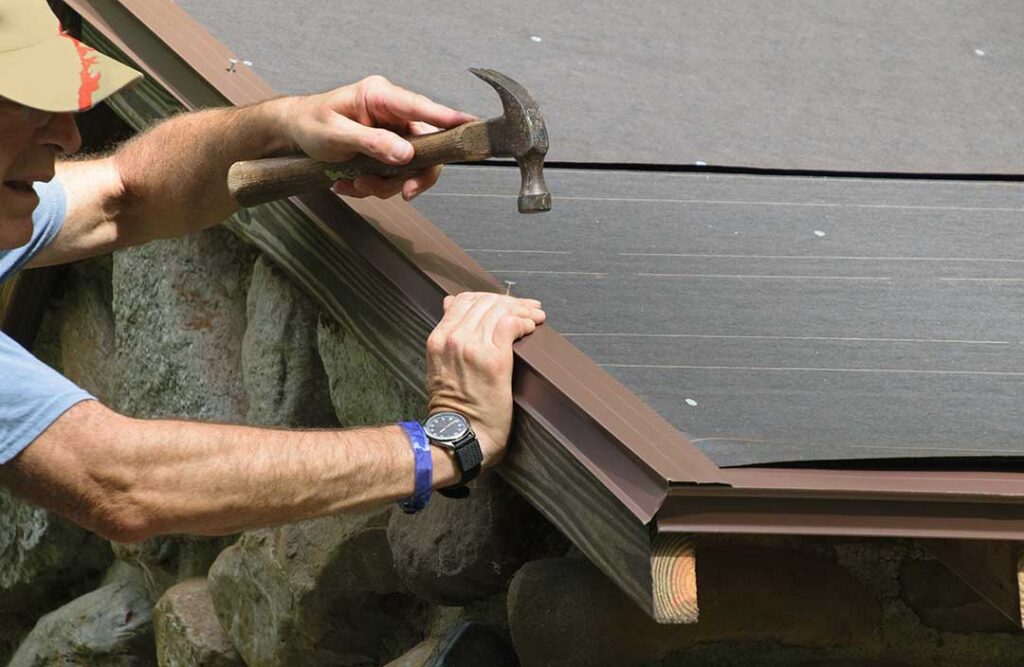
Hanging seasonal lights can add warmth to a home, but roof edges, ladders, electricity, snow, and ice create real safety risks. In Honeoye Falls, NY, decorations also need to withstand winter weather, wind, freezing temperatures, and occasional heavy snow.
The safest approach is to plan the installation from the ground, use equipment designed for outdoor use, avoid damaging roofing materials, and remove the lights before they become buried under snow or exposed to prolonged winter stress.
Is it safe to hang lights directly on roof shingles?
Usually, lights should not be attached by puncturing, stapling, or nailing into shingles, fascia, flashing, or roof decking. Holes can allow water to enter and may shorten the life of roofing components.
Use attachment methods that grip existing roof edges or gutters without creating openings. Suitable options may include:
- Clips designed for roof-edge or gutter mounting
- Removable attachments made for outdoor light strings
- Specialized clips that hold bulbs without compressing or tearing shingles
- Clips secured to gutters only when the gutter is firmly attached and able to support the light strand
Avoid forcing clips beneath brittle shingles. Older asphalt shingles can crack when lifted, especially during cold weather. If an attachment does not slide into place easily, use a different method rather than applying pressure.
What should be checked before climbing a ladder?
Inspect the roofline from the ground before carrying equipment outside. Look for loose gutters, damaged fascia, sagging branches, overhead utility lines, icy areas, and sections that would require stepping onto the roof.
A ladder should stand on firm, level ground. Keep all four feet stable, and never place a ladder on snow, ice, boxes, loose boards, or another unstable surface. In winter, the ground can freeze unevenly or become slippery from frost and thawing.
Before climbing:
- Check the ladder for bent rails, damaged feet, or loose hardware.
- Keep the ladder clear of overhead electrical lines.
- Maintain three points of contact while climbing.
- Have another adult stabilize the ladder when practical.
- Keep tools in a belt or raised with a controlled line rather than carrying them in both hands.
- Do not climb while holding a light strand, extension cord, or bulky container.
A ladder is not a substitute for walking on a steep, wet, icy, or snow-covered roof. If the installation requires roof access under hazardous conditions, postponing the work is safer than trying to work through the weather.
Should lights be installed on the roof itself?
For most homes, roof-edge lighting is safer than placing decorations across the roof surface. Walking on shingles can cause granule loss, cracking, or hidden damage, and the risk increases when the roof is damp, frosty, steep, or cold.
Lights can often be arranged along:
- The lower roof edge
- Gutter lines
- Porch or garage fascia
- Railings and entry structures
- Shrubs or other ground-level landscaping
Do not attach lights to chimneys, vents, plumbing stacks, skylights, or roof-mounted equipment unless the attachment method is specifically designed for that purpose. These areas may contain flashing or weatherproof seals that should not be disturbed.
Never use a chimney as a ladder support or tie-off point. Masonry, metal caps, and chimney flashing are not designed to support a person or ladder.
How can electrical risks be reduced?
Outdoor lights should be rated for outdoor use and connected to a properly protected outdoor receptacle. A ground-fault circuit interrupter, commonly called a GFCI, helps reduce shock risk by shutting off power when it detects an electrical imbalance.
Before installation, inspect each light string and extension cord. Do not use equipment with:
- Cracked or flattened insulation
- Exposed wires
- Broken sockets
- Loose plugs
- Burn marks
- Corroded connections
- Missing weather-resistant covers
Follow the manufacturer’s limits for connecting light strings. Connecting too many strands together can overload wires, plugs, or circuits, even when the lights appear to be operating normally.
Keep connections elevated and protected from puddles, snowbanks, and areas where melting ice will collect. Outdoor-rated covers can help protect connections, but they do not make damaged equipment safe.
Extension cords should be rated for outdoor use and sized for the electrical load and distance. Do not run cords through doorways or windows where they can be pinched. Avoid placing cords across walkways, driveways, or stairs where they may create a tripping hazard or be damaged by vehicles and snow removal equipment.
How should lights be secured for winter weather?
Light strands should be firm enough to resist wind but not pulled so tightly that the wire, socket, or attachment point is under constant strain. Leave a small amount of slack between clips, particularly near corners and transitions.
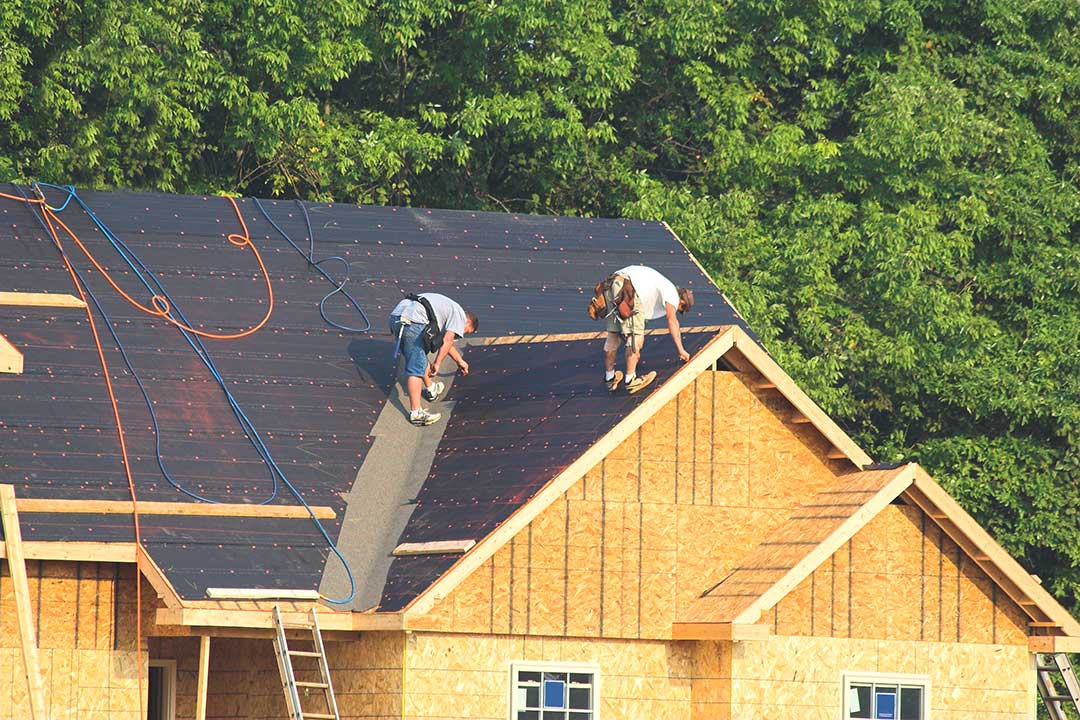
Do not allow lights to hang in a way that directs water toward electrical connections. Keep strands away from sharp metal edges, tree branches that move in the wind, and locations where ice can build up and pull downward.
Snow and ice can add substantial weight. A light installation that is secure in mild weather may become unsafe after freezing rain or repeated wet snow. After storms, inspect the display from the ground. If a strand is sagging, partially detached, or caught under ice, shut off power before approaching it.
Do not pull on frozen wires. Ice should not be chipped away with a tool because the impact can damage the insulation or the roof surface.
Is it safe to leave roof lights up all winter?
Many homeowners remove decorative lights after the holiday season or before the most severe winter weather. Leaving them installed for an extended period increases exposure to wind, ice, snow, sunlight, and temperature changes.
If lights remain in place:
- Turn them off before severe weather.
- Inspect them after strong wind or freezing rain.
- Remove them if clips loosen or wires begin to sag.
- Keep snow-removal tools away from light strings and cords.
- Do not allow snow or ice to be dragged across the roof edge during clearing.
- Disconnect power before making adjustments.
Timers can reduce the amount of time lights operate, but they do not prevent damage to cords or attachments. Automatic controls should be used only with equipment rated for outdoor conditions.
What common mistakes should be avoided?
Several installation habits create unnecessary roof or electrical damage:
- Using nails, staples, or screws through shingles
- Hanging lights from loose gutters
- Climbing onto an icy roof
- Using indoor-rated lights or cords outside
- Overloading one receptacle or connecting too many strands
- Running cords through closed windows or doors
- Leaving damaged bulbs or wires in service
- Pulling lights loose after ice forms
- Placing ladders against gutters, downspouts, or fragile trim
- Installing decorations near overhead power lines
A common misconception is that low-voltage or LED lights eliminate all safety concerns. They may use less electricity and produce less heat, but damaged wiring, wet connections, unstable ladders, and falling ice can still cause injuries or property damage.
When should the installation be postponed?
Wait for dry, calm conditions with clear ground and good visibility. Cold temperatures alone do not make installation impossible, but frozen shingles, icy ladders, high winds, and accumulating snow substantially increase the risk.
The work should be postponed if the roof edge cannot be reached without stepping onto a hazardous surface, if electrical equipment has been exposed to water or damage, or if the installation would require working close to power lines. In those situations, avoiding the hazard is more important than completing the display on a particular day.
For many area households, the most durable setup is a simple roof-edge arrangement installed before winter weather becomes severe, checked from the ground after storms, and removed before snow and ice place extra weight on the roofline.
