
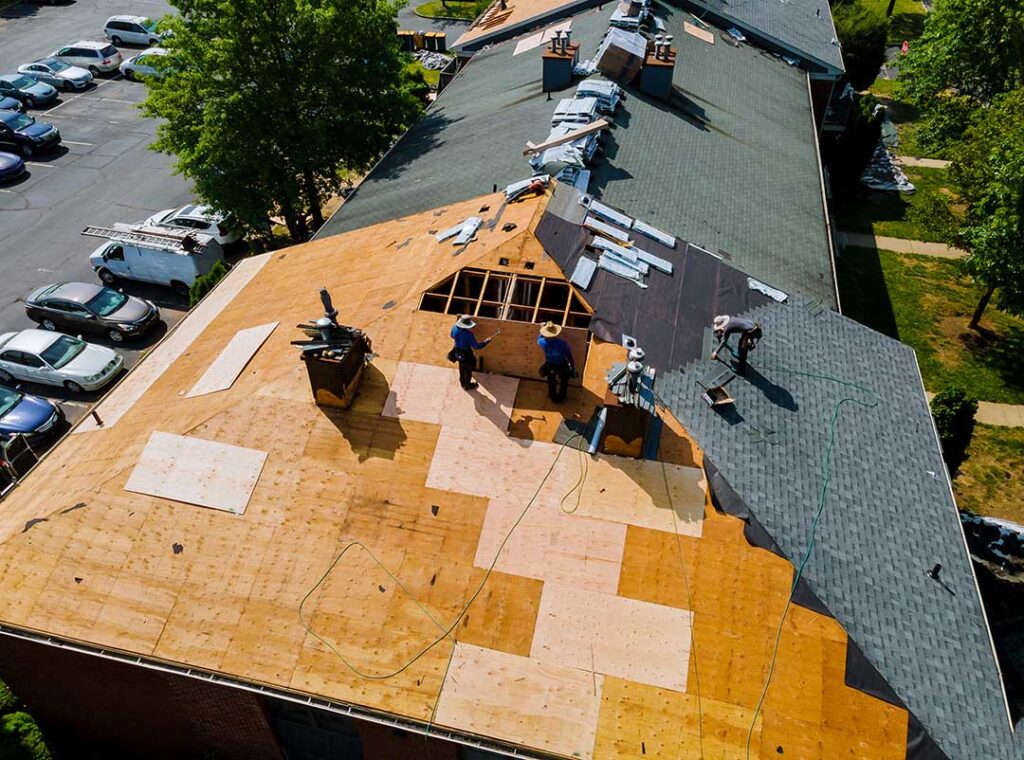
A typical asphalt-shingle roof lasts about 20 to 30 years, although some roofs need major repairs sooner and others remain serviceable longer. In Honeoye Falls, NY, the roof’s actual lifespan depends on shingle quality, installation, attic ventilation, roof slope, tree exposure, ice and snow, and how quickly small problems are addressed.
Roof age is a useful starting point, but it should not be the only factor used to decide whether replacement is necessary.
How long do common roofing materials last?
Different roofing materials have different expected service lives. These are broad planning ranges rather than guarantees:
- Basic three-tab asphalt shingles: approximately 15 to 20 years
- Architectural asphalt shingles: approximately 20 to 30 years
- Premium or specialty asphalt shingles: approximately 30 to 40 years in favorable conditions
- Wood shingles or shakes: approximately 20 to 30 years, depending heavily on maintenance and moisture exposure
- Metal roofing: approximately 40 to 70 years, depending on the metal, coating, fasteners, and installation
- Slate, clay, or concrete tile: often 50 years or more, although the supporting structure and underlayment may require attention sooner
These estimates assume proper installation and ordinary maintenance. A roof exposed to poor ventilation, repeated moisture, falling branches, or improper repairs may fail well before its expected age.
Why does the local climate affect roof life?
Seasonal weather can shorten a roof’s useful life even when there is no single dramatic storm. The regional climate includes cold, snowy winters, frequent thaws, rain, and substantial changes in temperature. Snowfall can vary considerably over short distances, and winter precipitation may alternate between snow, rain, and melting conditions. ([weather.gov](https://www.weather.gov/buf/ROCclifo?utm_source=openai))
Those conditions can affect roofing in several ways:
- Repeated freeze-thaw cycles can enlarge small cracks and loosen aging materials.
- Ice buildup near eaves can contribute to water backing up beneath shingles.
- Heavy snow places temporary weight on the roof structure.
- Wind can lift shingle edges or loosen flashing.
- Summer sunlight and heat gradually dry and stiffen asphalt-based materials.
- Moisture trapped beneath leaves, moss, or debris can accelerate deterioration.
A roof on an exposed home may age differently from a roof shaded by mature trees. Likewise, two houses with roofs installed in the same year may have very different remaining service lives.
Does a 20-year-old roof always need replacement?
No. A 20-year-old roof may still be performing adequately, while a younger roof may already have serious problems. Age should prompt a closer inspection, not an automatic replacement decision.
Important questions include:
- Are shingles missing, cracked, curled, blistered, or unusually brittle?
- Are there areas where the roof surface appears uneven or sagging?
- Is the attic showing water staining, damp insulation, daylight, or mold-like growth?
- Are metal flashings around chimneys, walls, vents, and roof edges deteriorated?
- Have leaks occurred more than once, even after repairs?
- Are granules collecting heavily in gutters or at downspouts?
- Has the roof experienced wind damage, falling branches, or ice-related problems?
A roof near the end of its expected life may still protect the home during ordinary weather but have little reserve for the next severe winter or wind event.
Which roof problems require prompt attention?
Active water entry deserves prompt attention, especially when water is reaching ceilings, electrical fixtures, insulation, or finished walls. A sagging roof surface, exposed underlayment, large areas of missing shingles, or a partially detached section also warrants quick evaluation because these conditions can worsen rapidly.
Some warning signs are less obvious. A musty attic, peeling paint near the ceiling, damp roof sheathing, or recurring stains may indicate a leak that only appears during particular wind directions or during snowmelt.
Not every ceiling stain means the entire roof has failed. Leaks can originate at flashing, valleys, plumbing penetrations, skylights, or ventilation openings. The visible indoor stain may also be several feet away from the actual entry point.
How do attic ventilation and insulation affect lifespan?
Poor attic conditions can shorten roof life from the underside as well as the top. Warm, moist air entering an inadequately ventilated attic can condense on cold roof sheathing. Over time, this may contribute to damp insulation, wood deterioration, fastener corrosion, and mold-like growth.
Excessive attic heat can also accelerate aging of asphalt shingles, particularly where ventilation is unbalanced. Proper attic ventilation generally requires a coordinated intake-and-exhaust design rather than simply adding a single vent.
Insulation matters too. Air leaks around light fixtures, plumbing penetrations, ductwork, and attic hatches can allow warm indoor air to reach the roof deck. Improving these conditions may help protect a roof, but ventilation changes should be evaluated as part of the whole attic system.
Can maintenance extend the life of a roof?
Routine maintenance cannot make an old roof new again, but it can reduce preventable damage and help identify problems earlier.
Useful maintenance includes:
- Keeping gutters and downspouts clear enough for water to drain.
- Removing branches that rub against shingles or strike the roof.
- Checking flashing after major wind or ice events.
- Watching for moss, heavy leaf accumulation, and standing water.
- Maintaining seals around appropriate roof penetrations.
- Inspecting the attic periodically for moisture or daylight.
- Keeping records of repairs, leaks, and the approximate installation date.
Walking on shingles unnecessarily can cause damage, especially when the material is cold, brittle, or already weakened. Roof surfaces are also hazardous when wet, icy, steep, or covered with debris.
How should homeowners judge whether to repair or replace?
Repair is often reasonable when damage is limited to a small, clearly defined area and the surrounding roofing remains in good condition. Replacement becomes more likely when problems are widespread, repairs recur in several locations, shingles are nearing the end of their service life, or the roof deck has sustained moisture damage.
The decision should account for both the visible roof covering and the layers beneath it. Replacing shingles over deteriorated decking or failed flashing may not solve the underlying problem.
Local building work may also involve code requirements and permits. The Village of Honeoye Falls administers the New York State Uniform Fire Prevention and Building Code and the State Energy Conservation Construction Code through its building-code administration chapter. ([ecode360.com](https://ecode360.com/43017780?utm_source=openai))
What is the simplest rule of thumb?
For many homes, an asphalt-shingle roof should receive closer attention after about 15 years and a more careful condition assessment around the 20-year mark. A roof that is 25 to 30 years old may be near the end of its expected service life, even if it has not developed an obvious interior leak.
The most reliable answer comes from combining the roof’s age with its condition, installation history, attic environment, weather exposure, and repair record. In a community with snowy winters and repeated freeze-thaw conditions, regular observation is more useful than relying on a calendar date alone.
